
1
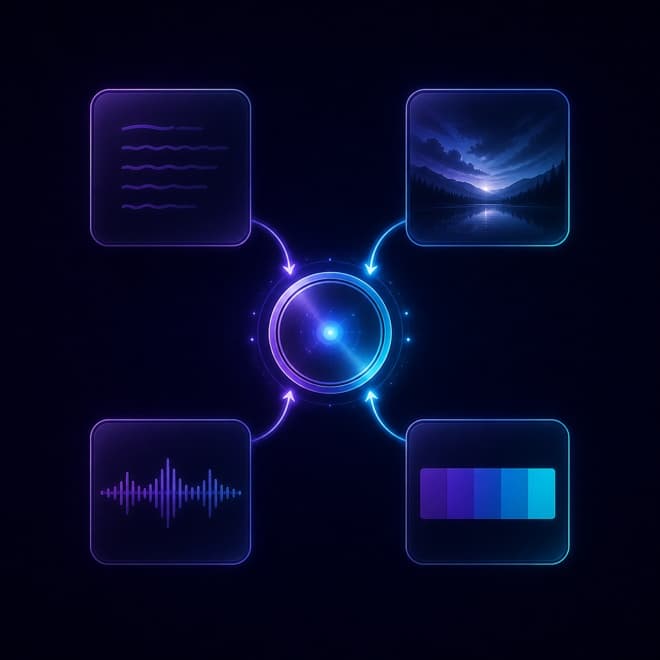
Describe what should stay recognizable
Name the lyric, scene, story, mood, or sound at the center of the song. A few concrete details give the model a clearer task than a list of broad adjectives.
Turn a lyric, story, mood, or scene into two complete playable song takes to hear and compare before reaching for a complex DAW.
Real paired takes
4 real inputs8 playable songsGenerated July 30, 2026
Original lyrics about leaving a hometown before sunrise, with intimate verses and a widening final chorus.
Why A: A is quieter overall, has the wider measured dynamic span, and reaches a soft resolution. B builds more strongly late in the song, but its ending measures as a fade.
A scene-led story brief about estranged siblings returning to a lakeside town and choosing forgiveness.
Why A: A runs longer, moves at the slower pulse estimate, and has a substantially wider measured dynamic span. Those traits give this narrative brief more space, while both versions end decisively.
A functional lo-fi study cue with a restrained middle lift, no lead vocal, and a resolved ending.
Why A: A has the pulse estimate closest to the requested 78 BPM feel, the darker spectral balance, and a decisive ending. B is longer and brighter, and its ending measures as a fade.
Original lyrics with a requested meter change, a four-bar voice-and-cello bridge, and a decisive ending.
Why B: B is the stronger choice within this pair: its +6.2 dB late-song lift and slightly wider measured dynamic span give the final chorus more contrast than A. Both versions reach only a soft resolution, and file measurements cannot confirm the requested meter switch or exposed bridge, so B is the closer interpretation rather than a full constraint pass; regenerate if those details are essential.
Name the lyric, scene, story, mood, or sound at the center of the song. A few concrete details give the model a clearer task than a list of broad adjectives.
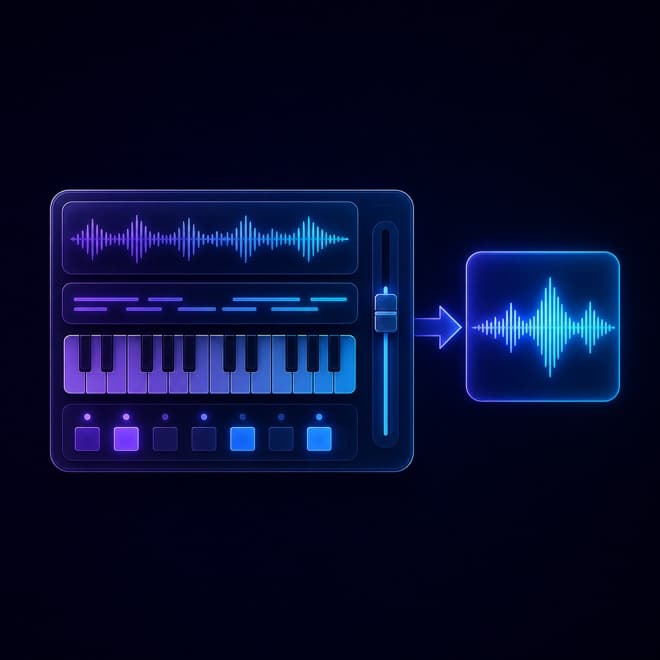
Choose a vocal song or instrumental, then guide the genre, instruments, pace, energy, and voice. Use Custom Mode when exact lyric lines need to remain in the song.
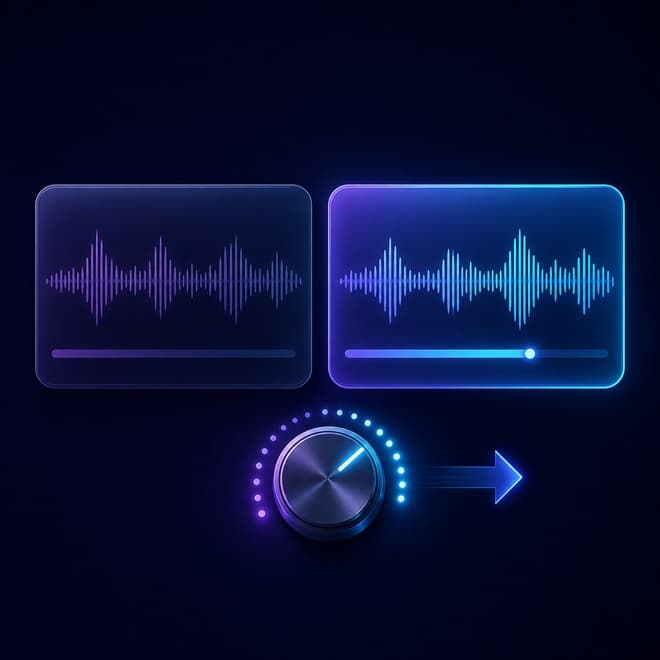
Compare melody, phrasing, rhythm, voice, and arrangement. Keep the direction that works, or revise one instruction instead of rebuilding the whole brief in a complex DAW.
Studio Optional is a direct path from written intent to something you can hear. Bring a lyric, story, mood, scene, or instrumental role, and the service returns two complete, playable takes for comparison before you commit to a complex production workflow.
Yes. Paste your lyric draft into Custom Mode, keep the section labels visible, and describe the sound separately. Studio Optional interprets those words with melody, vocals, and accompaniment so you can hear how the lyric might live as a song.
Both takes start from the same lyric, prompt, style, and model, but they can interpret the brief differently. Hearing both makes melody, voice, pacing, and arrangement choices concrete before you decide what to keep or change.
Yes. The Free Plan starts after sign-in. Free songs are public by default and available for online listening. Downloads, private generations, and commercial usage rights depend on the paid plan and current license terms.
Compare the two takes, keep the stronger direction, or revise one instruction and generate another pair. If you later need detailed production control, you can carry the direction you chose into your preferred workflow.
Paid plans include MP3 and WAV downloads, but downloads and commercial rights are different. Only eligible annual Starter and Plus generations receive the royalty-free commercial grant described in the License Agreement; Free and monthly-plan results do not.
Start with the detail that matters most. Studio Optional gives you two playable directions to compare before production gets complicated.